
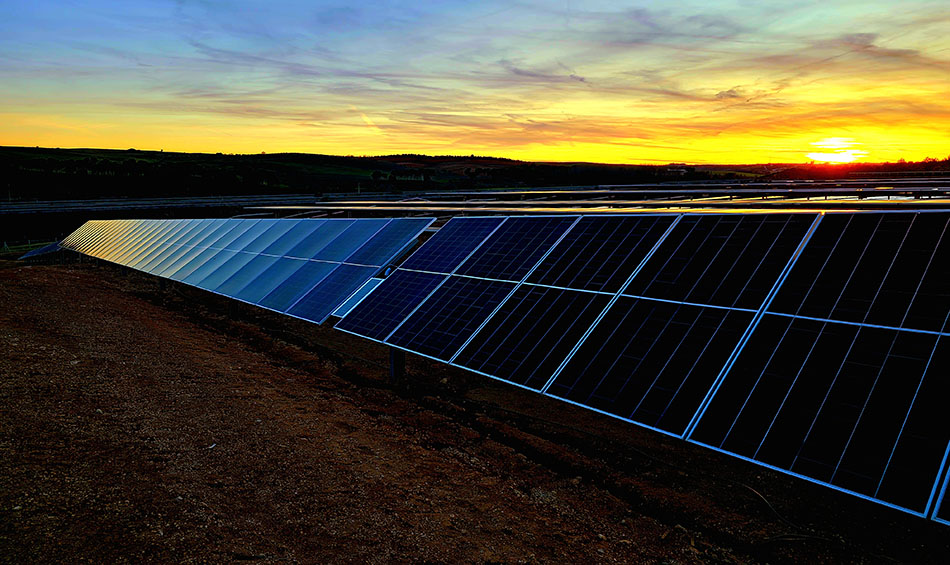
Explaining what is solar energy and its benefits is simple; however, the evolution of the infrastructure needed to harness solar energy to its fullest has been far more complex. Solar energy is one of the most accessible, clean, and abundant renewable sources on the planet. Its operation is based on capturing sunlight and converting it into electricity. To achieve this, photovoltaic solar panels are used—a technology that has evolved over decades to become the foundation of the renewable energy sector.
The evolution of solar trackers
The first photovoltaic systems built in the 1980s were static. Today, high-capacity solar plants are equipped with solar trackers, an evolution of those early systems that, thanks to their mobility, achieve much higher efficiency.
Their function is straightforward: the modules are oriented toward the sun to capture the maximum possible irradiation. Thanks to their tracking capability, energy yield increases significantly, allowing more electricity to be generated with the same solar resources.
Throughout the industry’s history, these systems have evolved from simple manual structures to fully automated trackers capable of adapting in real time to environmental conditions, reducing shading, and maximizing production throughout the day. This technological leap has been key to making solar energy a more stable, efficient, and competitive solution compared to conventional sources.
Solar Steel’s role in enhancing energy performance
Solar Steel has been driving this technological evolution for years, integrating robust, precise tracking solutions designed to maximize the performance of every photovoltaic installation. Its TracSmarT+ 1P and TracSmarT+ 2P solar trackers, engineered to optimize solar capture throughout the day, are a clear example of how advanced engineering can transform plant efficiency.
The combination of optimized design, cutting-edge engineering, and a strong commitment to sustainability has positioned solar trackers as a strategic component in the global growth of the photovoltaic sector. Complementary solutions such as RackSmarT, Solar Steel’s fixed structure designed for maximum durability and stability, further strengthen projects where robustness and low maintenance are essential.
Today, when we talk about what solar energy is, we’re not just referring to a clean, renewable energy source; we must also highlight the technological progress that allows us to harness it to the fullest and multiply its benefits. Solar trackers—and especially the solutions developed by Solar Steel—are a clear example of this evolution, enabling higher energy production, improving project competitiveness, and advancing toward a more efficient and sustainable energy model.