Europe’s energy transition is at a turning point marked by the need for stronger energy security, increased renewable capacity and greater project‑level efficiency. In this context, solar trackers in Europe have become one of the most decisive technologies for maximizing photovoltaic production and improving the profitability of utility‑scale plants.
In this interview, Ana Díaz and Marina Suárez, Business Development team Europe at Solar Steel, offers a clear view of the market’s evolution, the role of innovation and the emerging opportunities across different regions of the continent.

Innovation drives competitiveness
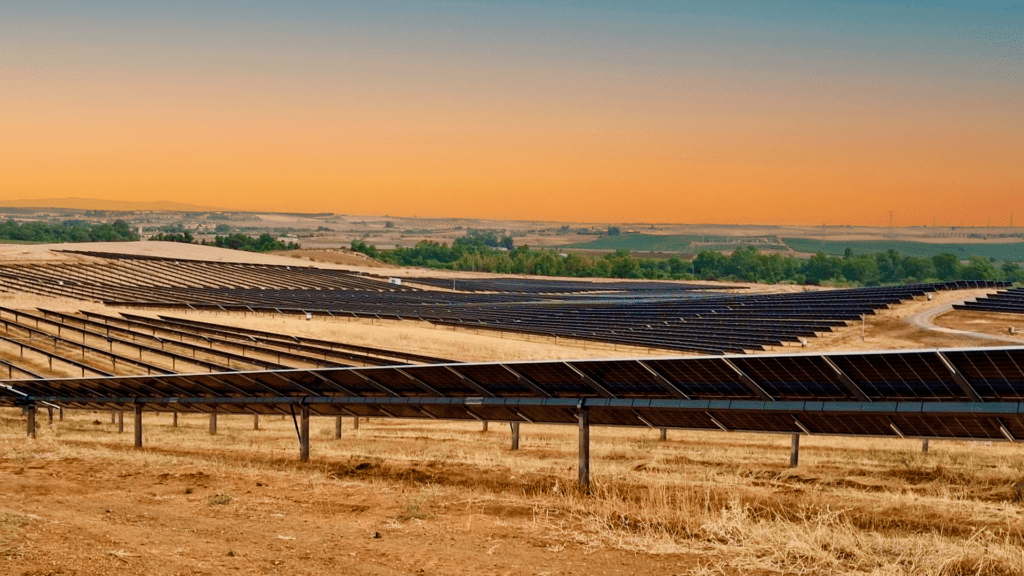
Innovation is essential in the development of solar trackers. According to Díaz, three elements determine competitiveness: advanced algorithms that ensure precise orientation, installation processes that simplify project execution, and structural reliability that guarantees long‑term performance in diverse terrains. The TracSmarT+ 1P and 2P trackers, equipped with Full Backtracking, increase production even in complex orography, reduce shading losses and directly improve project LCOE.
Solar trackers in Europe as a response to energy price volatility
In an environment defined by volatile electricity prices, solar trackers in Europe contribute to a more stable energy profile throughout the day. They allow production to be optimized, maximize each kWh generated and perform efficiently on uneven terrain. Solar Steel also highlights its flexible manufacturing model, based on its own production centers and additional partnerships that ensure a robust and diversified supply chain.
Strengthening Europe’s energy security
Geopolitical uncertainty has accelerated Europe’s need to reinforce energy independence. Solar trackers play a key role by increasing energy generation without requiring additional land, improving the use of available space and reducing LCOE thanks to higher daily output. With 21 years of experience, Solar Steel offers reliable and scalable solutions supported by the industrial strength of the Gonvarri Group and a multiregional supply chain that minimizes risks.
New European markets showing strong demand
Beyond traditional markets such as Spain, Italy and Portugal, demand for solar trackers in Europe is rising in Central and Eastern European regions, including the Balkans, where land availability and renewable expansion strategies are driving growth. The United Kingdom and France are also gaining traction, especially due to agrivoltaic projects that require adaptable structures. Even Nordic countries, despite lower irradiance, are beginning to adopt trackers as efficiency gains become increasingly attractive.
Evolving alongside storage and advanced market needs
As energy markets integrate storage and adopt more sophisticated operating strategies, solar trackers are becoming smarter. New algorithms respond to forecast models and real‑time conditions, improving operational continuity. Solar Steel’s TracSmarT+System enhances control and monitoring, and the company’s SmarTCare platform ensures strong after‑sales support. Trackers also integrate naturally with BESS solutions, helping optimize charging strategies and improving grid stability.
Outlook for solar trackers in Europe
Solar Steel anticipates continued growth in demand for solar trackers driven by the need to maximize energy output per MW installed and the support of European regulatory frameworks. Innovation in algorithms, installation efficiency and structural design will remain key differentiating factors. Although some markets will continue to rely on fixed structures, trackers will remain essential for utility‑scale projects across Europe.