
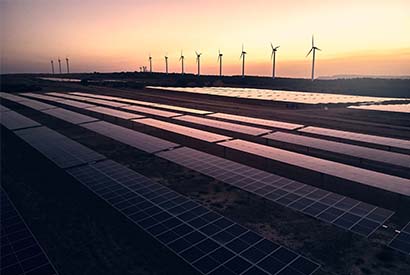
The history of photovoltaics is the story of how sunlight became one of the most important sources of clean electricity in the world. What began as a scientific discovery has evolved into a global industry capable of delivering competitive, reliable, and scalable renewable energy across utility-scale solar plants, commercial rooftops, carports, agrivoltaic projects, and complex energy infrastructures.
Photovoltaic technology has changed the way energy is produced, distributed, and consumed. Over time, solar power has moved from early laboratory applications to large-scale projects designed to support the global energy transition. This evolution has been driven not only by improvements in solar module efficiency, but also by the development of advanced solar mounting systems, fixed solar structures, and solar trackers capable of improving performance, durability, and project bankability.
At Gonvarri Solar Steel, this evolution is closely connected to our own history. With more than 20 years of experience in the photovoltaic sector, we have grown alongside the solar industry, helping transform photovoltaic projects from traditional ground-mounted installations into advanced utility-scale solar plants powered by high-performance tracking technologies.
What Is the History of Photovoltaics?
The history of photovoltaics begins with the discovery that certain materials can generate electricity when exposed to sunlight. This principle, known as the photovoltaic effect, became the foundation for the development of solar cells and modern solar PV systems.
For decades, photovoltaic technology evolved through research, experimentation, and industrial development. Early solar cells were limited in efficiency and application, but they opened the door to a new way of generating electricity directly from sunlight.
As technology improved, photovoltaics moved from specialized uses into broader energy applications. Solar PV systems gradually became more efficient, more durable, and more cost-effective, allowing the technology to grow from small installations into one of the most important pillars of renewable energy worldwide.
Today, photovoltaic energy is used in multiple applications, including:
- Utility-scale solar plants
- Commercial and industrial rooftops
- Ground-mounted solar projects
- Agrivoltaic installations
- Solar carports
- Hybrid renewable energy plants
- Infrastructure-integrated solar systems
This expansion shows how the history of photovoltaics has become a continuous journey of innovation, industrialization, and scale.
Why Are Solar Mounting Systems Important in Photovoltaic Projects?
Solar modules are the visible part of a photovoltaic plant, but structural systems are what make long-term performance possible. Every solar project requires a reliable support system capable of withstanding wind, snow, corrosion, terrain conditions, environmental loads, and decades of operation.
This is why solar mounting systems have played such an important role in the evolution of photovoltaics. Without robust and adaptable structures, solar PV could not have scaled efficiently from small installations to large utility-scale power plants.
Ground-mounted solar structures were especially important in the early expansion of the photovoltaic industry. They enabled developers to build larger projects on open land, increase installed capacity, and improve the competitiveness of solar energy.
Gonvarri Solar Steel began its photovoltaic journey in 2005, manufacturing ground-mounting systems for solar PV projects. This milestone marked the beginning of our contribution to the solar industry, supported by the industrial strength of Gonvarri Industries, a global group with more than 65 years of experience in steel transformation.
From the beginning, our approach was based on engineering, industrial reliability, manufacturing expertise, and long-term durability. These principles continue to define Gonvarri Solar Steel today.
How Did Solar Trackers Transform the Photovoltaic Industry?
As the solar industry matured, developers began looking for ways to increase energy production without simply increasing land use. This need contributed to the growth of solar trackers, one of the most important innovations in utility-scale photovoltaic projects.
Solar trackers allow PV modules to follow the sun’s movement throughout the day, maximizing solar irradiation capture and improving energy yield compared to fixed-tilt systems. In utility-scale solar projects, tracker technology has become a key factor for improving project economics, increasing energy production, and optimizing the long-term value of solar assets.
Gonvarri Solar Steel started installing its first solar trackers in 2012, expanding its capabilities from fixed and ground-mounted structures toward advanced solar tracking solutions.
In 2014, the company introduced its one-axis solar tracker, TracSmarT+1P, strengthening its position in the global utility-scale solar tracker market.
Since then, Gonvarri Solar Steel has continued to develop a complete portfolio of photovoltaic solutions designed to meet the needs of different projects, markets, and site conditions.
Gonvarri Solar Steel: More Than 20 Years Supporting the Evolution of Solar PV
The evolution of Gonvarri Solar Steel reflects the evolution of the photovoltaic industry itself.
We began in 2005 with the manufacturing of ground-mounting systems, supporting the early growth of large-scale solar installations. In 2012, we launched our first solar tracker installations, responding to the industry’s growing demand for higher energy yield and improved project performance. In 2014, we introduced TracSmarT+1P, our one-axis solar tracker designed for utility-scale photovoltaic projects.
Today, Gonvarri Solar Steel offers a complete range of solar solutions, including:
- 1P solar trackers
- 2P solar trackers
- Fixed solar structures
- Ground-mounted solar systems
- Rooftop solar solutions
- Solar carports
- Commercial and industrial solar structures
This multi-product portfolio allows us to respond to different project needs, from large utility-scale solar plants to rooftops, carports, and customized photovoltaic applications.
Our experience is built on more than two decades in the solar industry and the industrial heritage of Gonvarri Industries. This combination allows Gonvarri Solar Steel to offer solutions designed for performance, reliability, scalability, and long-term project value.
Why Does the History of Photovoltaics Matter Today?
Understanding the history of photovoltaics is essential to understanding where the solar industry is heading.
Solar energy has evolved from a promising technology into a strategic pillar of the global energy transition. However, today’s photovoltaic projects are more complex than ever. Developers and EPCs must consider not only energy production, but also bankability, installation efficiency, terrain adaptability, corrosion protection, lifecycle performance, regulatory compliance, and long-term O&M.
This is why the role of solar structures and solar trackers has become increasingly important.
Modern photovoltaic projects require technologies that can:
- Improve energy production
- Reduce installation complexity
- Adapt to different terrains
- Support large-format PV modules
- Optimize CAPEX and OPEX
- Improve long-term reliability
- Support project bankability
- Adapt to different regulatory environments
- Enable faster and more efficient construction
The evolution of photovoltaics is no longer only about solar cells and modules. It is also about the systems that make solar plants stronger, more efficient, and more scalable.
What Is the Future of Photovoltaics?
The future of photovoltaics will be defined by scale, flexibility, and integration.
Solar energy is expanding into new applications and more complex project environments. Utility-scale solar will continue to grow, but the industry is also moving toward agrivoltaics, hybrid solar and storage projects, floating PV, distributed generation, commercial rooftops, and infrastructure-integrated solar systems.
In this new stage, solar technologies must be more adaptable, more reliable, and more efficient than ever.
For Gonvarri Solar Steel, the future of photovoltaics means continuing to develop solutions that help developers, EPCs, and asset owners maximize project value across different geographies and applications.
From ground-mounting systems in 2005 to today’s advanced 1P solar trackers, 2P solar trackers, fixed structures, rooftops, and carports, our history is directly connected to the transformation of the solar industry.
The history of photovoltaics is still being written. Its next chapter will be shaped by smarter engineering, stronger industrial capabilities, advanced solar tracking technologies, and solutions designed to make solar energy more competitive, reliable, and scalable worldwide.
Frequently Asked Questions About the History of Photovoltaics
What is the history of photovoltaics?
The history of photovoltaics refers to the evolution of solar technology from the discovery of the photovoltaic effect to modern solar PV systems used in utility-scale plants, rooftops, carports, agrivoltaic projects, and renewable energy infrastructures.
When did photovoltaic technology become important for energy generation?
Photovoltaic technology became increasingly important as solar cells improved in efficiency, manufacturing costs decreased, and renewable energy became a global priority. Over time, solar PV moved from specialized applications to large-scale electricity generation.
Why are solar mounting systems important in photovoltaic projects?
Solar mounting systems provide the structural support required to install PV modules safely and reliably. They are essential for long-term durability, project performance, and the successful deployment of ground-mounted and utility-scale solar plants.
When did Gonvarri Solar Steel start working in photovoltaics?
Gonvarri Solar Steel began manufacturing ground-mounting systems for photovoltaic projects in 2005, supported by the industrial experience of Gonvarri Industries.
When did Gonvarri Solar Steel start installing solar trackers?
Gonvarri Solar Steel started installing its first solar trackers in 2012, expanding its photovoltaic portfolio into advanced tracking technologies.
When did Gonvarri Solar Steel introduce TracSmarT+1P?
Gonvarri Solar Steel introduced its one-axis solar tracker, TracSmarT+1P, in 2014, reinforcing its position in the utility-scale solar tracker market.
What photovoltaic solutions does Gonvarri Solar Steel offer today?
Gonvarri Solar Steel offers 1P solar trackers, 2P solar trackers, fixed solar structures, ground-mounted systems, rooftop solar solutions, and carports, covering a wide range of photovoltaic applications.
Why are solar trackers important in modern photovoltaic plants?
Solar trackers help PV modules follow the sun’s path throughout the day, increasing solar energy capture and improving energy production compared to fixed-tilt systems. They are especially valuable in utility-scale solar projects.
How is Gonvarri Solar Steel connected to the evolution of photovoltaics?
Gonvarri Solar Steel has supported the evolution of photovoltaics for more than 20 years, from ground-mounted solar structures in 2005 to advanced solar tracker solutions and multi-application photovoltaic systems today.