
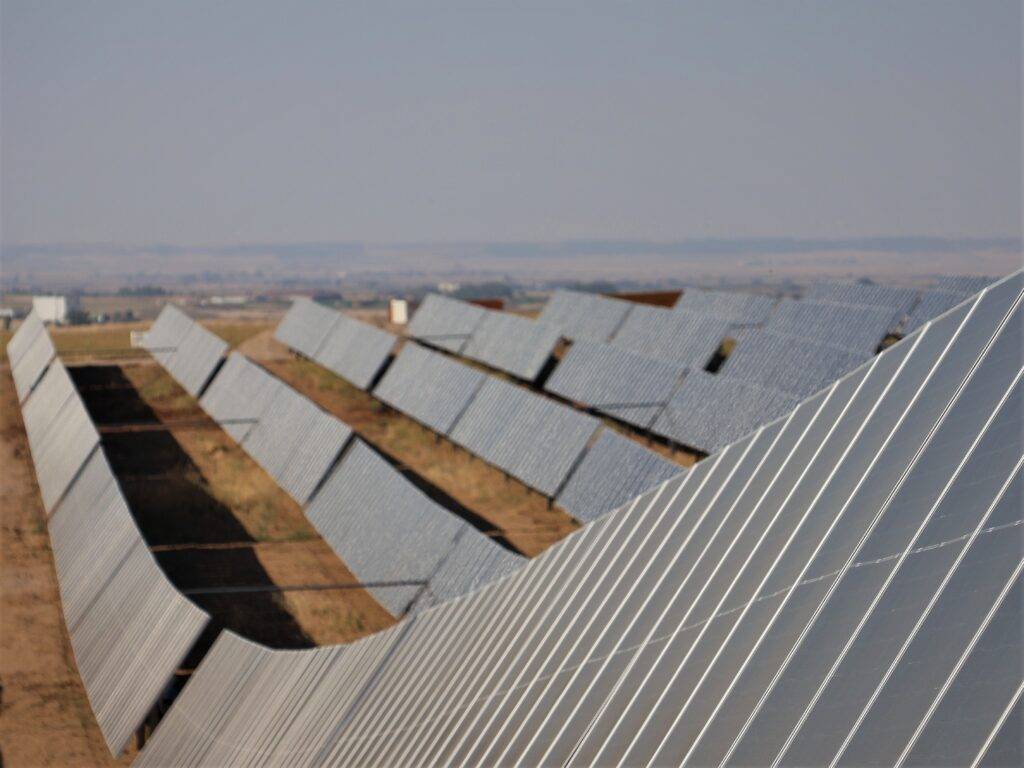
Mexico is entering a new phase of utility-scale solar development, and our trackers from Solar Steel are rocking it.
Driven by strong solar irradiation, increasing electricity demand, growing industrial consumption, and a new generation of large photovoltaic projects, the country is rapidly positioning itself as one of the most attractive solar markets in the Americas.
The recent wave of renewable energy projects promoted under CFE-related development schemes confirms the scale of this opportunity. Thousands of megawatts of new photovoltaic capacity are expected to be deployed in the coming years, creating significant opportunities for developers, EPC contractors, investors, and technology providers.
Why Is Mexico Becoming One of the Most Important Solar Markets in Latin America?
Mexico combines several factors that make it particularly attractive for utility-scale photovoltaic development.
The country benefits from some of the highest levels of solar irradiation in the world, especially across northern and central regions. These conditions provide exceptional opportunities to maximize photovoltaic generation and improve project economics.
At the same time, the expansion of industrial activity, the growth of nearshoring investments, and increasing electricity demand continue to drive the need for new generation capacity.
As a result, solar energy is expected to play a critical role in supporting Mexico’s future energy needs.
Why Are Solar Trackers Mexico projects are Essential for Utility-Scale in Mexico?
As photovoltaic plants become larger and more sophisticated, developers increasingly seek technologies capable of maximizing energy production while maintaining competitive project economics.
This is where solar trackers Mexico projects gain a significant advantage.
Compared to fixed-tilt structures, solar trackers allow photovoltaic modules to follow the sun’s path throughout the day, increasing solar capture and optimizing plant performance.
For utility-scale projects, this can translate into:
- Higher energy production.
- Better land utilization.
- Improved project profitability.
- Enhanced project bankability.
- Lower Levelized Cost of Energy (LCOE).
- Greater long-term asset value.
These benefits have made solar trackers one of the most widely adopted technologies in modern utility-scale photovoltaic plants.
Why 1P Solar Trackers Are Becoming the Preferred Solution
Among the different solar tracking technologies available, 1P solar trackers continue to gain popularity across large-scale solar projects.
Their combination of performance, mechanical simplicity, installation efficiency, and adaptability makes them particularly attractive for markets such as Mexico.
Modern 1P solar trackers are designed to:
- Support high-power photovoltaic modules.
- Adapt to complex terrain conditions.
- Reduce installation time.
- Improve O&M efficiency.
- Optimize energy production.
- Deliver long-term structural reliability.
As project portfolios continue to grow, developers increasingly prioritize tracker technologies capable of combining performance with scalability.
How Gonvarri Solar Steel Supports Solar Growth in Mexico
For more than a decade, Gonvarri Solar Steel has actively participated in the development of Mexico’s photovoltaic sector.
With more than 1 GW supplied in the country, the company has supported some of the most significant utility-scale solar projects, delivering advanced solar tracking solutions adapted to local requirements and environmental conditions.
Today, Gonvarri Solar Steel’s 1P solar trackers continue to help developers maximize project performance through:
- Terrain adaptability.
- Advanced tracking algorithms.
- Reduced installation complexity.
- Long-term reliability.
- Utility-scale deployment capabilities.
This experience allows the company to support developers throughout every stage of the project lifecycle, from engineering and procurement to construction and long-term operation.
What Will Drive the Future of Solar Trackers in Mexico?
The future of solar trackers Mexico will be shaped by several key factors.
Utility-Scale Project Expansion
New photovoltaic developments will continue to increase demand for high-performance tracking technologies.
Grid Modernization
The expansion of generation infrastructure will require increasingly efficient solar assets capable of maximizing energy production.
Bankability
Investors and lenders will continue prioritizing technologies supported by strong track records and proven operational performance.
Industrial Demand
The expansion of manufacturing and nearshoring investments will increase electricity demand, creating additional opportunities for large-scale solar deployment.
Technology Optimization
Future projects will require tracker solutions capable of reducing CAPEX, optimizing LCOE, and maximizing energy yield.
The Future of Solar Energy in Mexico Will Be Defined by Execution
Mexico’s solar opportunity is no longer theoretical.
The resource exists. The demand exists. Investment appetite remains strong.
The next challenge is execution.
As thousands of megawatts move from planning toward construction, developers will increasingly rely on technologies that maximize energy production, improve project economics, and support long-term asset performance.
That is why solar trackers in Mexico will continue to play a fundamental role in the country’s energy transition.
And as utility-scale solar deployment accelerates, advanced 1P solar trackers will remain one of the most effective tools for transforming solar potential into operational generation.
FAQ
Why are solar trackers important in Mexico?
Solar trackers increase energy production by allowing photovoltaic modules to follow the sun throughout the day, maximizing generation in regions with high solar irradiation such as Mexico.
What are the benefits of 1P solar trackers?
1P solar trackers improve energy yield, reduce LCOE, support large-scale deployment, and offer excellent adaptability for utility-scale solar projects.