What Is Driving Margin Pressure Across the Solar Market Europe?
The European utility-scale solar sector continues to expand rapidly, but project economics are becoming increasingly complex.
Developers face multiple challenges simultaneously:
- Rising construction costs.
- More complex permitting processes.
- Inflationary pressure.
- Higher financing costs.
- Extreme wind and environmental load requirements.
- Increasing grid integration challenges.
- Implementation of CBAM.
- More complex project sites.
Across the solar market Europe, the availability of ideal flat terrain is becoming more limited, forcing developers to build projects in increasingly challenging locations.
As a result, construction costs associated with earthworks, foundations, grading, and site preparation are becoming critical contributors to overall project CAPEX.
How Is CBAM Affecting Utility-Scale Solar Projects?
The Carbon Border Adjustment Mechanism (CBAM) is introducing a new economic reality for infrastructure and renewable energy projects throughout Europe.
CBAM encourages greater transparency regarding embedded carbon emissions in industrial products and materials, forcing developers to pay closer attention to supply-chain decisions and material optimization.
The impact is clear:
Projects can no longer rely exclusively on procurement strategies to maintain profitability.
Instead, developers increasingly need solutions capable of reducing material consumption, simplifying installation, and minimizing unnecessary construction activities.
This shift is changing how investors, EPCs, and developers approach project design throughout the solar market Europe.
Why Engineering Is Becoming More Important Than Procurement
For years, solar project optimization focused heavily on lowering equipment costs.
Today, however, many of the largest opportunities for cost reduction exist elsewhere.
The most competitive utility-scale projects are increasingly those capable of reducing complexity before construction even begins.
Effective engineering can help reduce:
- Steel consumption.
- Earthworks requirements.
- Foundation quantities.
- Civil works costs.
- On-site labor.
- Construction schedules.
- Operational risk.
Every unnecessary activity removed from a project contributes directly to improving project economics.
The result is stronger profitability, lower risk exposure, and improved project bankability.
Why Terrain-Adaptive Trackers Are Becoming Critical in Europe
One of the biggest hidden costs in utility-scale solar projects is terrain preparation.
As developers move into sites with more complex topographies, traditional tracker layouts often require significant grading and land modification.
These activities not only increase CAPEX but also create environmental impacts and extend construction schedules.
This is why terrain-adaptive trackers are becoming one of the fastest-growing technology priorities in the solar market Europe.
Their ability to adapt to natural terrain helps developers:
- Minimize earthworks.
- Preserve site characteristics.
- Improve constructability.
- Reduce project risk.
- Accelerate schedules.
- Optimize project economics.
How SmarTSlope Helps Reduce Earthworks and Improve LCOE
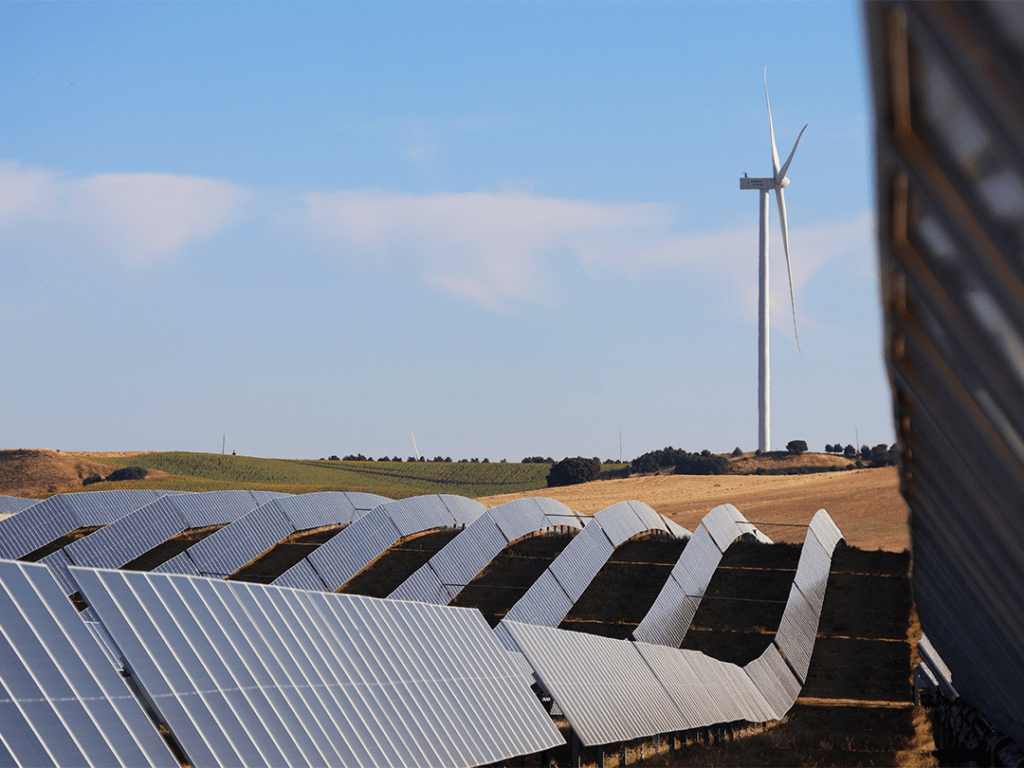
Solar Steel’s SmarTSlope technology was designed specifically to address one of the most significant challenges facing utility-scale solar projects: terrain adaptability.
Integrated into the company’s 1P solar trackers, SmarTSlope allows greater variation between piles while maintaining structural performance and energy generation capabilities.
By following the natural contours of the land more effectively, SmarTSlope helps reduce the need for extensive grading and site preparation.
This directly contributes to:
Lower CAPEX
Less excavation, less grading, and fewer civil works requirements reduce upfront project costs.
Improved LCOE
Lower construction costs combined with optimized solar generation contribute to a more competitive Levelized Cost of Energy.
Enhanced Project Feasibility
More sites become economically viable for solar development.
Reduced Environmental Impact
Minimizing earthworks helps preserve the site’s original characteristics and reduces construction-related emissions.
What Makes a Solar Project Bankable in Today’s European Market?
Bankability remains one of the most important considerations for investors, lenders, developers, and EPCs.
A bankable project is not simply a project with strong energy production.
It is a project capable of delivering predictable long-term financial performance.
Key bankability factors include:
- Construction certainty.
- Proven technology.
- Long-term durability.
- Operational reliability.
- Supply-chain stability.
- Reduced execution risk.
- Predictable O&M requirements.
Engineering decisions influence every one of these factors.
This is why reducing complexity is becoming increasingly important across the solar market Europe.
The Future of the Solar Market Europe Will Be Defined by Smarter Design
The next generation of utility-scale solar projects will be built differently.
Developers are discovering that the greatest opportunities for value creation are often found not in procurement negotiations, but in engineering decisions.
Projects that reduce:
- Earthworks.
- Steel consumption.
- Construction complexity.
- Installation time.
- Operational risk.
will have a clear competitive advantage.
In a market increasingly shaped by CBAM, tighter margins, and greater investor scrutiny, engineering is no longer just a technical discipline.
It has become a profitability strategy.
The future of the solar market Europe will belong to projects that combine performance, bankability, and constructability from the earliest stages of design.
Because protecting project profitability starts long before construction begins.
It starts with engineering.
Frequently Asked Questions
What is the biggest challenge facing the solar market Europe today?
The main challenge is maintaining project profitability while dealing with higher construction costs, CBAM-related pressures, complex permitting processes, and increasingly difficult project sites.
How do terrain-adaptive trackers improve solar project economics?
Terrain-adaptive trackers reduce earthworks, grading requirements, and civil works costs, helping improve project feasibility and lower overall CAPEX.